Stucco Installation & EIFS Finishes
Energy-Efficient, Moisture-Managed Exteriors for Toronto & the GTA
Licensed & insured • WSIB coverage • Manufacturer-aligned assemblies • Color-matched finishes • Trim & moulding fabrication • Clean, safe worksites
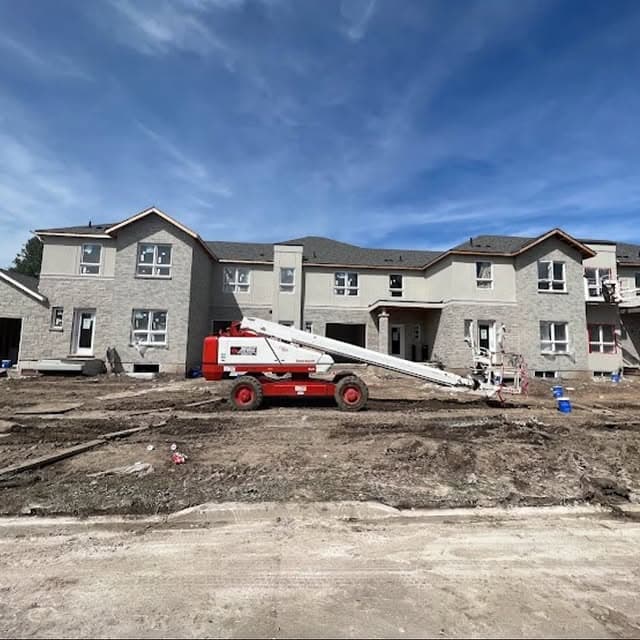
Ozwan Stucco installs high-performance EIFS (Exterior Insulation and Finish System) and acrylic stucco for homes, multiplexes, and low-rise commercial buildings. Our systems combine continuous insulation, proven moisture details, and durable acrylic finishes to improve curb appeal and reduce thermal bridging in Toronto’s climate.
A typical scope includes substrate assessment, flashing and sealant details, foam board installation (EPS/XPS), rasping, fiberglass mesh embedded in a polymer-modified base coat, primer, and a color-stable acrylic finish. We also integrate drip edges, corner beads, control joints, and custom mouldings for crisp, long-lasting lines.
We follow manufacturer guidance and Canadian best practices (e.g., EIFS with drainage concepts, proper WRB/transition detailing). Where applicable, we coordinate with your consultant or designer for wind load, fire, and continuity requirements.
7-Step EIFS Installation Process
- 1. Substrate review, flashing layout & sealant planning at windows/doors/transitions
- 2. Adhesive application and insulation board layout (EPS/XPS) with staggered joints
- 3. Mechanical fastening where specified and rasping for a true, even plane
- 4. Base coat application with embedded fiberglass mesh (standard or high-impact)
- 5. Edge beads, drip edges, corner protection, and control joints installed
- 6. Primer coat to standardize suction and color uniformity
- 7. Acrylic finish coat (texture & color) and compatible sealants to complete the system
Services We Offer
- EIFS installation for new builds and retrofits (residential & low-rise commercial)
- Acrylic stucco re-skins and color refreshes
- Moisture management upgrades: flashing, drip edges, kick-outs, sealant replacement
- Stucco trims & mouldings: bands, quoins, sills, keystones, cornices
- EIFS repairs: impact damage, blisters, delamination, localized water intrusion
- Parging and substrate touch-ups prior to system install
- Color matching and texture blending for partial façades and additions
Looking for plaza or multi-unit work? See our Commercial Stucco & EIFS Services.
Materials, Details & Good Practice
- Insulation: EPS/XPS foam boards; thickness sized to energy goals and budget
- Base/adhesive coats: polymer-modified for adhesion and impact resistance
- Fiberglass mesh: standard and high-impact options for traffic-exposed zones
- Accessories: PVC/metal beads, drip edges, corner protection, control joints
- Sealants: compatible, flexible perimeter joints around windows/doors/transitions
- Moisture: kick-out flashing, sill pans, weep paths, and WRB/transition detailing
- Acrylic finishes: color-stable, water-shedding textures (fine to coarse)
We align with Canadian EIFS best practices and manufacturer guidance for assemblies with drainage, transition details, and sealant compatibility. Project-specific design or testing (e.g., fire, wind) is coordinated with the owner’s consultant where required.
Maintenance Tips & When to Call Us
EIFS is low maintenance. Keep gutters clear, verify sealants every few years, and avoid high-pressure washing. If you see impact damage, cracks at transitions, staining under eaves, or soft spots, we can assess and repair localized areas before they spread.
Service Areas in Toronto & the GTA
We serve Toronto, North York, Scarborough, Etobicoke, Mississauga, Brampton, Vaughan, Richmond Hill, Markham, Oakville, Burlington, Pickering, Ajax, Whitby, and nearby communities.
Detailed Service Guide
How Ozwan Builds an EIFS or Stucco Installation That Lasts
A good stucco installation is not just a finish coat. It is a layered exterior wall assembly that has to manage insulation, water, movement, impact, colour, sealants, and the way every window, door, roof line, balcony, foundation, and trim detail meets the wall.
Our 5-Step Stucco & EIFS Installation Process
Every Ozwan installation follows the same disciplined sequence so the wall performs as a system, not just a finish coat.
On-site assessment & wall review
We inspect the substrate, flatness, moisture risk, cracks, and every transition at windows, doors, rooflines, and grade, then confirm a written scope before any material is ordered.
System design & material selection
We confirm EIFS or acrylic stucco, insulation thickness (EPS/XPS), mesh type, finish texture, colour and LRV, and any trims or reveals so the design is locked before work starts.
Substrate prep & insulation layout
We clean and stabilize the wall, repair weak areas, then adhere or fasten insulation boards with staggered joints and rasp to a true, even plane.
Base coat, mesh & reinforcement
We embed fiberglass mesh in a polymer-modified base coat, add high-impact mesh at vulnerable zones, and install corner beads, drip edges, and control joints for strength and clean lines.
Acrylic finish, trims & moisture details
We prime, apply the colour-stable acrylic finish in your chosen texture, install decorative trims, and seal control joints and penetrations so the system sheds water and looks intentional.
Toronto & GTA Pricing Guidance
Typical Toronto and GTA stucco installation pricing depends on wall size, access, insulation thickness, substrate repair, trims, finish texture, colour, and moisture-management details. These ranges are budget guidance only; a site review is needed for a firm quote.
Full EIFS or insulated stucco installation
$18-$35 per sq. ft.
Common planning range for full exterior insulated systems when substrate, access, insulation, mesh, base coat, primer, finish, and standard details are included.
Acrylic stucco over prepared existing wall
$10-$22 per sq. ft.
Applies when the existing wall is sound enough for preparation, reinforcement, base coat or finish work without a full rebuild.
Full home exterior planning range
$18,000-$65,000+
Whole-home projects vary heavily with elevation size, insulation depth, decorative trims, repair findings, access, and finish selections.
What Makes a Strong Installation
Ozwan treats stucco installation as an exterior envelope project first and a cosmetic finish second. The wall has to be inspected for flatness, movement, moisture risk, substrate condition, and tie-ins before finish material goes on. On EIFS projects, insulation board layout matters because poorly staggered joints, uneven rasping, weak corners, or missing reinforcement can show through the finish and shorten service life. On acrylic stucco overlays, the existing wall has to be cleaned, profiled, bonded, and reinforced so the new finish is not simply hiding old movement or trapped moisture. This is why our installation process starts with assessment, not colour selection.
Layers, Materials, and Performance
A complete EIFS assembly can include adhesive or mechanical fastening, EPS or XPS insulation, rasping, base coat, fiberglass mesh, high-impact mesh where needed, primer, acrylic finish, accessories, and compatible sealants. Each layer has a job. The insulation improves thermal continuity. The base coat and mesh create strength. The primer supports colour consistency. The acrylic finish sheds water and gives the wall its final appearance. Accessories such as corner beads, drip edges, control joints, starter tracks, and trim profiles create clean lines and manage movement. The details are what separate a wall that only looks new from a wall that performs.
Where Installation Usually Connects to Other Services
Many installation projects also need decorative trims, parging, colour planning, or repair work. A new EIFS wall may need bands, sills, keystones, or cornices to match the architecture. A re-stucco project may uncover cracks, delamination, failed sealants, or soft substrate that should be repaired before coating. Foundation areas may need parging or base-of-wall detailing so the exterior looks complete from grade to roofline. Commercial projects may add scheduling, access, tenant disruption, and larger wall movement into the planning. Linking these services helps the page reflect how real stucco projects are actually scoped.
Human Planning Notes
If you are comparing quotes, ask what is included behind the finish: mesh type, insulation thickness, accessory details, sealant scope, transition treatment, and how the crew will handle existing cracks or damaged areas. The cheapest quote often removes the invisible items first, which is exactly where stucco failures begin. A detailed scope should explain what is being installed, what is being reused, what is being repaired, and what conditions would require a change before work continues.
Toronto and GTA Installation Conditions
Stucco installation in Toronto and the GTA has to be planned for freeze-thaw cycles, wind-driven rain, lake-effect moisture, shaded walls, road salt, tight lot lines, and older mixed-material homes. A wall in North York may have different exposure than a wall in Etobicoke, Scarborough, Mississauga, Vaughan, or Markham. South and west elevations usually take more sun and thermal movement, while shaded side walls may hold moisture longer after storms. Ozwan reviews exposure, roof overhangs, balcony lines, driveway splashback, grading, downspouts, and nearby trees before confirming the installation approach. That local context matters because a stucco system is not just a surface. It is a wall assembly that has to dry, move, insulate, and connect to the building without trapping water behind the finish.
Pre-Installation Inspection and Scope Control
Before new EIFS or acrylic stucco is installed, the wall should be checked for weak sheathing, old cracks, deteriorated masonry, failed paint, water staining, soft areas, poor flashing, missing drip edges, and uneven planes. On many Toronto homes, additions, porch enclosures, garage returns, and older repairs create mixed substrates that cannot be treated the same way. Ozwan separates the quote into what is known, what is included, and what may change if hidden damage is exposed. This protects the homeowner from vague pricing and protects the installation from being rushed over a problem. Strong scopes explain insulation thickness, mesh type, base coat, finish texture, trim work, sealants, repair allowances, access needs, and how weather delays will be handled.
Substrate Preparation for Older GTA Homes
Many GTA stucco installations happen on homes that already have brick, block, concrete, framed additions, painted stucco, siding transitions, or old cement parging at the base. Each substrate needs a different preparation strategy. Loose paint, dust, chalky masonry, oil, failed coating, and hollow stucco have to be removed or isolated before new material is applied. Flatness matters because uneven walls can telegraph through the finish, especially with fine acrylic texture. Corners, window returns, and garage openings need straight layout before the finish stage. Proper preparation is not glamorous, but it is the difference between a clean exterior upgrade and a new finish that inherits every weakness from the old wall.
Moisture Management at Openings and Transitions
Windows, doors, balcony edges, roof-wall intersections, decks, porch roofs, light fixtures, hose bibs, vents, meters, and foundation transitions are where most exterior wall problems begin. Ozwan plans these areas before coating the field wall. Sealants must be compatible and flexible. Drip edges and sill details should move water away from the wall instead of letting it run down the face. Flashing and kick-out details should be reviewed wherever roofs meet stucco. The base of the wall should not trap water against grade. In Toronto and GTA weather, small water-management mistakes can become staining, swelling, cracking, and delamination after repeated winter cycles.
Insulation Thickness and Energy Upgrade Planning
EIFS gives homeowners an opportunity to improve comfort because continuous exterior insulation reduces thermal bridging through framing, rim areas, and mixed substrates. The right insulation thickness depends on wall depth, window returns, trim design, code expectations, budget, and how the new wall will align with existing brick, stone, siding, soffits, and foundation details. Thicker insulation can improve performance but may require more careful planning around fixtures, railings, eaves, downspouts, and steps. Ozwan helps clients think through the full assembly instead of treating insulation as a simple add-on. The best result balances energy performance, clean lines, moisture control, and a finished exterior that looks intentional.
Mesh, Impact Resistance, and High-Risk Zones
Not every part of a stucco wall faces the same risk. Driveways, narrow walkways, side entrances, garbage storage areas, commercial storefronts, porch walls, and low sections near grade often need stronger reinforcement than upper elevations. Standard fiberglass mesh may be enough for many walls, but high-impact mesh or additional reinforcement can be smart where bikes, bins, tools, ladders, snow shovels, or foot traffic regularly touch the surface. Corners need clean wrapping and straight profiles. Openings need diagonal reinforcement to reduce cracking at stress points. These details are especially important in tight Toronto lots where the side wall is both an exterior wall and a daily service path.
Texture, Colour, and Neighbourhood Fit
A new stucco installation should improve curb appeal without looking disconnected from the home or neighbourhood. Toronto and GTA streets often mix brick, stone, siding, older stucco, and modern additions, so colour and texture should be chosen with surrounding materials in mind. Fine textures can look clean and contemporary but need very careful substrate preparation. Medium textures hide small imperfections and suit many homes. Dark colours need LRV and heat considerations, especially on sun-heavy walls. Trim colour, window returns, foundation parging, garage surrounds, and soffit colours should be reviewed together so the finished exterior has one clear design direction.
Weather Windows and Installation Sequencing
Stucco installation is weather sensitive. Base coat, primer, and acrylic finish need suitable temperatures, dry surfaces, and protection from rain, freezing, extreme heat, or heavy wind. In Toronto, spring and fall projects require extra scheduling discipline because temperatures can swing quickly. Summer work may need shade planning and earlier starts on sun-facing elevations. Winter work may require postponement or enclosure depending on the material and manufacturer guidance. Ozwan sequences preparation, board work, mesh, base coat, primer, finish, trims, and sealants so each layer has the right conditions to cure and bond. Rushing the schedule is one of the easiest ways to shorten the life of the wall.
What a Strong Installation Quote Should Explain
A detailed stucco installation quote should answer more than price. It should explain what wall areas are included, what materials are being used, whether insulation is included, how cracks or damaged substrate will be handled, what trim profiles are included, how sealants and transitions are treated, what finish texture and colour are planned, and whether permits, access, scaffolding, or disposal affect the scope. Homeowners comparing Toronto and GTA stucco contractors should be cautious when a quote only lists a finish coat and a total number. The hidden layers create the performance. The visible finish only proves its value when the layers behind it are done correctly.
Long-Term Maintenance After Installation
A well-built stucco or EIFS installation still benefits from simple maintenance. Homeowners should keep downspouts working, avoid piling snow against the wall, trim vegetation away from the finish, watch sealants around windows and penetrations, clean staining gently, and address small impact damage before water can enter. Annual visual checks after winter are useful in Toronto because freeze-thaw cycles can reveal weak sealants, splashback issues, or small cracks. Maintenance does not mean the wall is fragile. It means the exterior envelope is being treated like the protective system it is. Small attention keeps the finish looking newer and helps prevent small issues from becoming major repairs.
Toronto Permit, Access, and Neighbour Coordination
Many stucco installation projects in Toronto happen on narrow lots, semi-detached homes, laneway-adjacent walls, shared driveways, and streets where parking and material staging are limited. The installation plan should account for where scaffolding or ladders can safely sit, how neighbouring properties will be protected, where waste will be staged, and how deliveries will reach the work area. This is not just convenience planning. Restricted access can affect how insulation boards are carried, how long elevations take, whether protection is needed over walkways, and how crews maintain straight lines on upper walls. Ozwan treats access as part of the scope so the project is realistic before work begins.
Common Installation Mistakes Homeowners Should Avoid
The most common mistakes are choosing only by price, skipping substrate repair, ignoring sealant scope, using a finish colour before confirming LRV, adding trims after the wall design is already fixed, and treating EIFS as just foam plus colour. A wall can look attractive on day one while still having weak corners, poor transitions, missing reinforcement, or water traps. Toronto homeowners should ask how the crew handles window returns, downspouts, vents, meter boxes, porch roofs, driveway splash zones, and foundation terminations. A reliable installation scope should make the hidden work visible enough that the client understands what they are paying for.
How Ozwan Connects Installation to Related Pages
A strong service page should help a customer move through the real decision path. Someone searching for stucco installation may also need acrylic colour guidance, decorative trim design, foundation parging, or repair of old damaged stucco before the new assembly begins. Ozwan links those services because installation is rarely isolated. A full exterior upgrade may start as an EIFS inquiry and become a coordinated package: insulation, trims, acrylic finish, base-of-wall parging, and repair of problem areas. That internal linking also helps search engines and language models understand that Ozwan is not describing a single coating, but a complete exterior wall workflow.
Neighbourhood Fit Across the GTA
A stucco installation in Toronto, North York, Scarborough, Etobicoke, Mississauga, Vaughan, Markham, Richmond Hill, or Brampton should respect the home style and surrounding materials. Some areas have older brick-heavy streets where a full stucco conversion needs warm colours and restrained trims. Other neighbourhoods lean modern with black windows, flat panels, and sharp lines. Suburban homes may need garage returns, porch columns, and large wall planes handled carefully so the finish does not look blank. Ozwan plans the installation around the actual property instead of forcing one generic stucco look onto every GTA home.
Documentation and Photo Proof
For larger installation projects, progress photos help homeowners understand what is being built before the final finish hides the layers. Photos of substrate repair, insulation layout, mesh reinforcement, base coat, trims, and transition details can be useful for future maintenance and resale conversations. They also create real proof for the Our Work gallery and blog topics. Ozwan's refined upload and proof-media structure supports that approach by letting completed work connect back to the correct service pages. Good documentation is not marketing fluff. It shows that the wall was built as a system, not only finished as a surface.
How to Compare Installation Quotes Fairly
A fair comparison needs more than the final number. Homeowners should compare insulation type and thickness, mesh specification, primer, finish brand or equivalent, trim allowance, sealant scope, scaffolding or access assumptions, substrate repairs, cleanup, warranty language, and weather delay handling. If one quote includes high-impact mesh at vulnerable zones and another does not, the prices are not equivalent. If one quote excludes repairs behind the old finish, the project may grow later. Ozwan aims to make the scope readable so a client can compare real value instead of guessing which contractor hid fewer details.
Related Ozwan Services
Stucco jobs usually cross more than one trade label. These linked pages help customers and crawlers understand the full exterior scope around this service.
Related Blog Topics
These topic links keep service pages connected to educational blog content as the blog library grows.
Quick Answers
Is EIFS better than traditional stucco?
EIFS is often better when continuous insulation and energy performance matter. Traditional or acrylic stucco overlays can be a strong fit when the existing wall is sound and the goal is a durable finish refresh.
What should be decided before installation starts?
The key decisions are insulation thickness, finish texture, colour, trim profiles, control joints, sealant scope, transition details, and whether any substrate repairs are required.
How long does a stucco installation take in Toronto or the GTA?
Small elevations may take a few working days, while full homes can take longer depending on access, repairs, insulation, trim work, and weather. Drying and curing time matters, so a careful schedule is better than a rushed finish.
Can EIFS be installed over brick?
It can be possible when the brick is sound, clean, dry, and properly prepared, but the wall must be inspected for movement, moisture, and attachment requirements before a final scope is recommended.
What is the most important installation detail?
There is no single detail. The biggest risk areas are openings, roof-wall transitions, base-of-wall conditions, reinforcement, sealants, and substrate preparation because those areas control moisture and movement.
Does exterior insulation change the look of windows and trims?
Yes. Added insulation changes wall depth, so window returns, sills, trim profiles, lights, vents, and downspouts need to be planned so the finished wall looks clean and intentional.
Frequently Asked Questions
Is EIFS suitable for Toronto’s climate?
Yes—proper moisture details (flashing, sealants, drainage) make EIFS an excellent exterior for freeze–thaw cycles while improving energy performance.
Can you match existing colors or textures?
We provide a wide range of acrylic textures and custom color options. We can produce samples to help you choose or match an existing façade.
What kind of warranty do you offer?
We stand behind our workmanship and align with the finish manufacturer’s guidance. Warranty specifics depend on the project scope and materials—ask us for details during your quote.
Or explore our Commercial Stucco & EIFS Services.