Stucco Contractor Toronto: Repair, Recoat, EIFS, Parging, and Pricing Guide for Local Homeowners
What to ask before hiring a stucco contractor in Toronto or the GTA, especially when you are comparing cracks, recoating, EIFS, acrylic finish, parging, and commercial facade work.
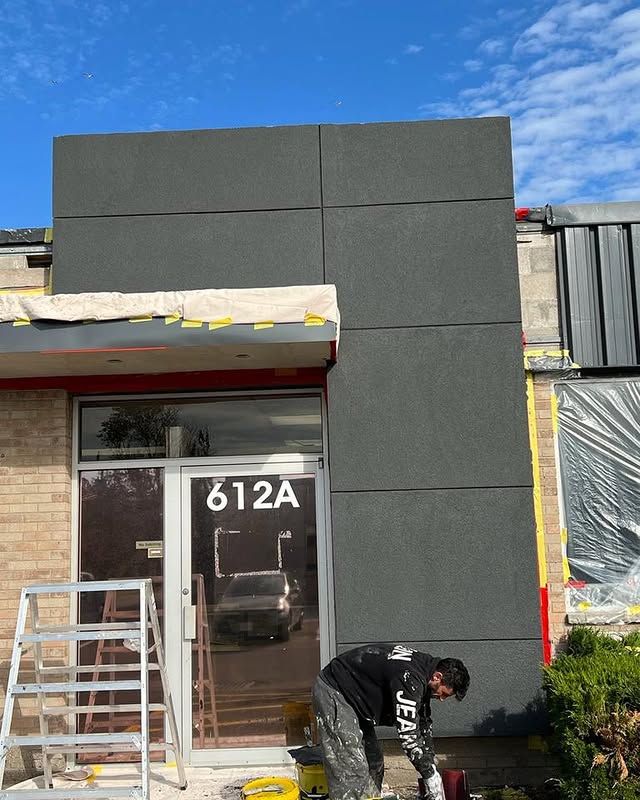
The phrase stucco contractor Toronto is competitive because homeowners and property managers usually search it when something important is at stake. The exterior may be cracked, stained, dated, leaking, flaking near the foundation, or ready for a full curb-appeal upgrade. Many local competitors target the same keyword, but the useful answer is not simply a list of services. The useful answer is how to choose the right scope.
This guide explains what a serious stucco contractor should help you understand before you approve a quote: whether you need repair or replacement, how acrylic recoating differs from EIFS installation, why parging is not waterproofing, what affects pricing, and what details matter in Toronto and GTA conditions. If you can ask sharper questions, you can avoid vague quotes and choose a contractor based on the wall assembly, not just the lowest number.
What a Stucco Contractor Should Actually Do
A stucco contractor should do more than apply finish. The contractor should inspect the existing wall, explain visible symptoms, identify likely moisture and movement risks, describe the preparation method, and recommend a scope that fits the building. For some homes, that means a small repair. For others, it means opening damaged EIFS, replacing insulation, repairing sealants, and recoating a full elevation. For a full exterior upgrade, it may mean new insulation, trims, acrylic finish, and foundation parging.
A contractor who only talks about colour may be skipping the most important part. Stucco, EIFS, and acrylic finish are exterior envelope work. Windows, doors, vents, roof lines, parapets, balconies, and foundations all affect how the wall performs. In Toronto and the GTA, those details matter because weather punishes shortcuts. The contractor should make the hidden work clear enough that you understand what is being protected behind the final coat.
Commercial and Modern Stucco Work Needs Cleaner Scope
Modern acrylic stucco and commercial EIFS walls expose mistakes quickly. Straight reveals, dark finishes, sign bands, storefront frames, and large wall planes make colour, texture, and flatness highly visible. A contractor should explain how the finish will be made consistent across the wall and when localized patching will not be enough.
For property managers, the scope also needs access planning, tenant coordination, site protection, and repair priorities. Commercial stucco work can be phased, but each phase should still have a clear purpose: stop water, repair damage, improve appearance, or refresh the full facade.
Repair Versus Recoat Versus Replacement
Repair is usually the right word when damage is localized and the wall around it is sound. This can include routing cracks, reinforcing patches, rebuilding impact damage, replacing sealants, and blending acrylic finish. Recoat is usually the right word when the wall is generally stable but the colour is tired, multiple patches exist, or a consistent finish is needed after repairs. Replacement or re-stucco becomes more relevant when the existing wall has widespread delamination, moisture damage, weak substrate, or many failing layers.
The mistake is assuming the cheapest scope is automatically the best scope. A small patch may be smart on a small crack, but it may look terrible on a faded front elevation. A recoat may be good value when several repairs would otherwise remain visible. A full rebuild may be necessary when the wall is not sound. A good Toronto stucco contractor should explain the trade-off instead of pushing one answer for every house.
How Contractors Should Diagnose Stucco Cracks
Crack diagnosis starts with location and pattern. Diagonal cracks at window corners may point to stress or missing reinforcement. Cracks near roof lines may relate to water direction or flashing. Low-wall cracking may be tied to snow, salt, splashback, or foundation movement. Random hairlines may be cosmetic, but cracks with staining, softness, bulging, or hollow sounds deserve more investigation.
A repair quote should say whether the contractor expects to route and reinforce the crack, open the wall, replace damaged insulation, redo sealants, or recoat a larger area. If the quote only says patch stucco, it may not be detailed enough. Toronto homeowners should be especially cautious with cracks that return after winter, because freeze-thaw cycles often reveal that water or movement is still active.
What to Ask an EIFS Contractor
EIFS installation and repair require attention to insulation, mesh, base coat, finish, accessories, sealants, and water management. Ask what insulation type and thickness are included. Ask how boards are attached and rasped. Ask what mesh is used at corners, impact zones, and openings. Ask how windows, doors, fixtures, vents, and roof intersections are handled. Ask whether the quote includes primer and what acrylic finish is planned.
For repairs, ask whether damaged insulation will be replaced or only skimmed over. Ask how the contractor will tie the patch into sound material. Ask whether colour matching is realistic or whether a larger recoat is recommended. A knowledgeable EIFS contractor should answer in assembly language, not only finish language. The wall is a system, and every layer affects the result.
Local Pricing Signals and Red Flags
Pricing is not identical from one property to another, but the reason for the price should be understandable. Full EIFS installation may be priced per square foot. Acrylic recoating may be priced by wall area and preparation. Trim work may involve linear footage and profile complexity. Parging may depend on removal, bonding, mesh, and finish type. Repairs may be priced by damage depth and access rather than by a simple square-foot number.
A red flag is a quote that is much cheaper but does not mention substrate condition, sealants, access, mesh, primer, or transition details. Another red flag is a contractor who promises an invisible patch on a faded wall without explaining texture and colour limitations. A good contractor does not make the price mysterious. They explain what is included, what is excluded, and what conditions could change the final scope.
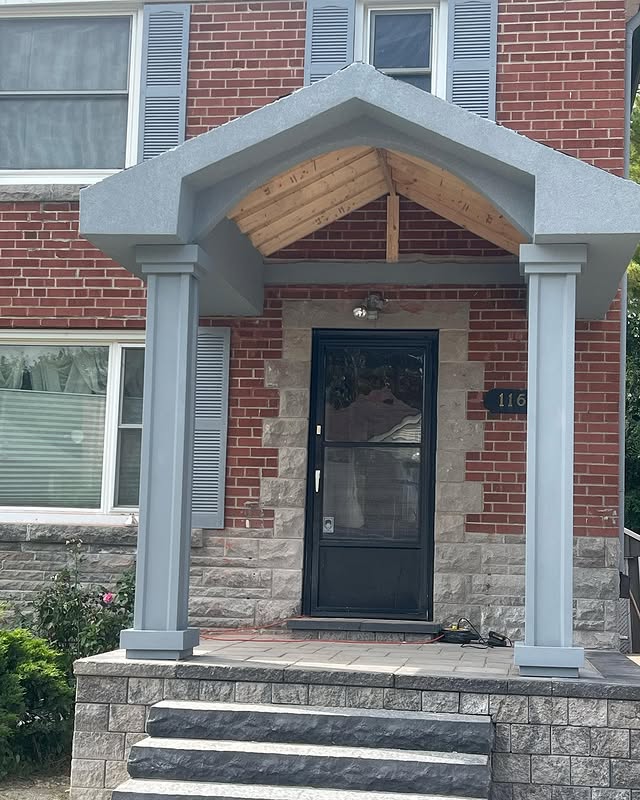
Decorative Trims and Entry Details Are Part of Contractor Quality
A contractor's quality often shows at the details: porch surrounds, window returns, columns, sills, bands, corners, and how stucco meets brick or stone. These details are visible from the street and vulnerable to water if they are shaped poorly.
Decorative trims should be proportional, reinforced, and finished with clean transitions. The right contractor should explain whether trims are being repaired, added, replaced, or finished as part of a full wall system. A beautiful entry detail can lift the whole exterior when it is planned with the wall instead of added as an afterthought.
Parging and Foundation Work Should Be Explained Clearly
Many homeowners search for a stucco contractor because the lower part of the house is cracking or flaking. That may be parging, foundation coating, splashback damage, or a base-of-wall transition issue. Parging can clean up and protect the visible foundation face above grade, but it is not the same as basement waterproofing. If water is entering below grade, the right scope may involve waterproofing, drainage, membranes, or crack repair before the finish is restored.
A contractor should be clear about this distinction. Surface coating can improve appearance and above-grade protection, but it cannot solve every water problem. If a contractor sells parging as a full waterproofing cure without inspecting the moisture source, the homeowner should slow down and ask more questions.
Commercial Stucco Contractor Questions
Commercial stucco work adds practical constraints: tenants, storefronts, parking, signage, lifts, access barriers, working hours, and customer visibility. A commercial quote should explain phasing, repair areas, colour and texture plan, sealant scope, site protection, and access assumptions. For plazas and multi-unit buildings, consistency matters because large walls make patch boundaries obvious.
Property managers should ask whether the work is a maintenance repair, a visual refresh, or a deeper facade correction. They should also ask how the contractor will document completed work. Photos, captions, and linked proof media help show what was repaired and why. That matters for approvals, tenant communication, and future maintenance planning.
Contractor Comparison Checklist
Does the quote identify the exact wall areas included?
Does it separate repair, recoat, EIFS installation, trim, and parging scope?
Does it explain substrate preparation and hidden-damage assumptions?
Does it include primer, mesh, sealants, accessories, and finish details?
Does it address access, scaffold, lift, cleanup, and weather timing?
Does it explain colour matching limitations?
Does it include Toronto and GTA site realities like salt, snow, shade, and tight access?
Does the contractor have project photos that connect to the service being quoted?
Why Local Proof Matters More Than Generic Claims
A contractor can write that they handle stucco repair, but local proof is stronger. Photos of Toronto and GTA projects show the kinds of buildings, access conditions, finishes, trims, and repair situations the company actually handles. A proof image tied to a service page is more useful than a random gallery photo because it helps homeowners understand the relationship between the picture and the service they need.
Ozwan's Our Work structure is built around that idea. Project images can be connected to service pages, location pages, and blog topics. That helps people see real exterior conditions and helps search engines understand the work more clearly. For homeowners, it makes the decision less abstract. You are not only reading about EIFS, repair, parging, or acrylic finish; you can see examples connected to those services.
The Best Service Page to Read Next
If the wall is cracked, start with stucco repair. If the surface is stable but dated, read acrylic stucco and recoating guidance. If the goal is a full exterior upgrade with insulation, read stucco installation and EIFS planning. If the lower wall is flaking, compare parging and foundation repair. If the building is commercial, review the commercial services page before asking for pricing because access, tenants, and phasing can change the job.
This service-link path is intentionally built into the blog because searchers often arrive with a broad phrase like stucco contractor Toronto. The right answer depends on the symptom, the property type, and the wall condition. Moving from the blog into the exact service page helps the homeowner ask better questions and helps crawlers understand that each topic is supported by a real local service.
Stucco Contractor Toronto FAQ
How do I know if I need repair or full re-stucco?
Localized damage can often be repaired. Widespread cracking, delamination, moisture damage, many old patches, or weak substrate may need recoating or a larger re-stucco scope.
Should I hire a contractor for parging or waterproofing?
Hire for parging when the issue is the visible above-grade foundation finish. If water is entering below grade, waterproofing or drainage work may be needed first.
Can a stucco contractor match old colour and texture?
Sometimes, but old walls fade and weather unevenly. Good contractors explain when a spot repair can blend and when a larger recoat is the cleaner option.
What is the biggest quote red flag?
The biggest red flag is a vague quote that does not explain preparation, repair assumptions, mesh, primer, sealants, transitions, access, or what happens if hidden damage is found.
Want a site-specific stucco plan?
Related Ozwan Services
This guide connects directly to the service pages that match the topic, so you can move from research into the exact stucco, EIFS, parging, repair, or commercial scope.
Need help with a stucco project?
Continue to Booking
Ozwan Stucco is a licensed EIFS stucco contractor serving Toronto & the GTA. We install insulated stucco systems, mouldings & trims, and exterior finishes that insulate, protect, and elevate curb appeal.
Useful Links
About Us
Our Work
Book a Quote
Credentials
Licensed & Insured • WSIB Coverage